Subtotal $0.00



A real Motorpoint workshop example of crankshaft damage, bearing failure and the warning signs drivers should never ignore
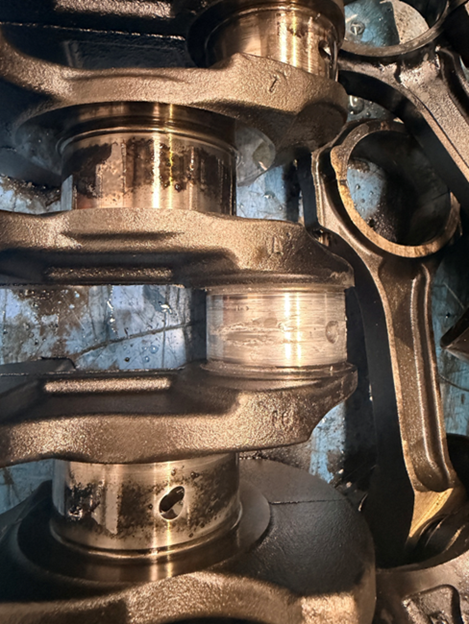
Workshop photo: heavily scored crankshaft journals and removed connecting-rod components.
| THE SHORT ANSWER This crankshaft is badly damaged. The journals are deeply scored and show signs of heat and metal-to-metal contact. In plain English, the bearing was no longer riding on a protective film of oil. It most likely wiped or spun, but we still need measurements and oil-system checks to find out why it happened. |
When we opened this engine, the damage was obvious. The shiny round sections of the crankshaft—called journals—should feel smooth. They run inside thin bearing shells, with pressurised engine oil keeping the metal surfaces apart. In this case, that oil cushion failed.
Here is what stands out in the workshop photo:
This is not normal wear and it is not a ‘fit new bearings and send it’ repair. The engine has to come apart so the crankshaft, bearings, connecting rods and oil system can all be checked properly.
Think of the crankshaft as floating on a very thin cushion of oil. When the engine loses oil pressure or oil flow, that cushion disappears. The bearing touches the crankshaft, friction rises almost instantly and the bearing material begins to smear or break up. If the engine keeps running, metal debris travels through the oil system and damages more components. That is how a warning light or light knock can quickly become a complete engine failure.
Low engine oil or oil starvation. This can happen because of an oil leak, heavy oil consumption, a very low sump level or continuing to drive after the red oil-pressure light comes on.
Low oil pressure. A worn oil pump, blocked pickup strainer, leaking pickup seal, stuck pressure-relief valve, worn bearings or a restricted oil passage can stop enough oil reaching the crankshaft.
Old, dirty or incorrect engine oil. Long service intervals, sludge, fuel dilution, coolant contamination or the wrong oil viscosity can reduce protection and block small oil passages.
Incorrect bearing clearance or previous assembly work. A wrong bearing size, blocked oil hole, dirty assembly, incorrectly fitted cap or incorrect bolt torque can cause a rebuilt engine to fail early.
Overheating or hard use. High coolant temperature, over-revving, heavy towing, detonation or loading a cold engine heavily can overwhelm the oil film.
Another mechanical problem. A bent connecting rod, distorted bearing housing, crankshaft run-out, misalignment or a damaged harmonic balancer can create uneven loading. These need to be tested; the photo alone cannot confirm them.
| IMPORTANT DIAGNOSTIC POINT The photo tells us where the engine failed, but not what started the failure. If someone simply installs another crankshaft without checking the oil pump, pickup, clearances, contamination and overheating history, the replacement engine may suffer exactly the same damage. |
Do not restart an engine with this level of crankshaft damage. The correct next step is a full strip-down and inspection by a qualified repairer or engine reconditioner. The job should include:
Sometimes. A crankshaft reconditioner may be able to grind lightly damaged journals to an approved undersize and fit matching bearings. But the grooves in this crankshaft look substantial. If the metal has overheated, the journals are too far out of specification, cracks are found or no approved undersize is available, replacement is usually the safer option.
There is no honest one-price answer from a photo. The best option depends on the vehicle, the condition of the block and connecting rods, parts availability, labour and warranty. With widespread metal contamination, a professionally reconditioned or verified replacement engine can sometimes cost less than rebuilding the damaged unit. We would base that decision on measurements and a written quote not guesswork.
| Warning sign | What to do |
| Red oil-pressure light | Stop safely, switch off the engine and arrange towing. |
| Deep knock or rumble | Do not continue driving; request an oil-pressure and internal-engine assessment. |
| Metal in oil or filter | Treat it as evidence of internal wear and investigate before further operation. |
| Overheating or coolant in oil | Stop driving and diagnose the cooling system and possible internal contamination. |
| Low oil level repeatedly | Find the leak or consumption cause and confirm oil pressure and engine condition. |
No. A deep knock that rises with engine speed can indicate crankshaft or connecting-rod bearing damage. Stop the engine and have the vehicle towed. Continuing to drive can seize the engine or send metal through the oil system.
Not necessarily. It normally warns that oil pressure is too low. The level may be low, but a failed pump, blocked pickup or worn bearings can cause the same warning. Stop safely and switch the engine off.
Common warning signs include a deep engine knock, low oil pressure, the red oil warning light, metal in the oil or filter, overheating and sudden loss of power. These symptoms can have other causes, so proper diagnosis matters.
The cost varies widely because the engine must usually be removed and stripped. Machining may be possible in some cases; others need a replacement crankshaft, full rebuild or replacement engine. An accurate quote requires inspection and measurements for the exact vehicle.
From what we can see, this engine needs more than a set of bearings. The important job is finding out why the oil film failed and whether the block, connecting rods and oil system can still be used. At Motorpoint, we can investigate engine knocking, low oil pressure, oil leaks and overheating, then explain whether repair, reconditioning or engine replacement makes sense. If the red oil light appears or the engine starts knocking, switch it off and arrange a tow. A few more minutes of driving can turn a repairable problem into a ruined engine.
| BOOK AN ENGINE DIAGNOSTIC Contact Motorpoint in Ravenhall, Melbourne, for mechanical inspection and honest repair advice. Bring your service history and describe when the warning light, noise, overheating or oil loss first appeared. Availability and repair scope are subject to inspection. |